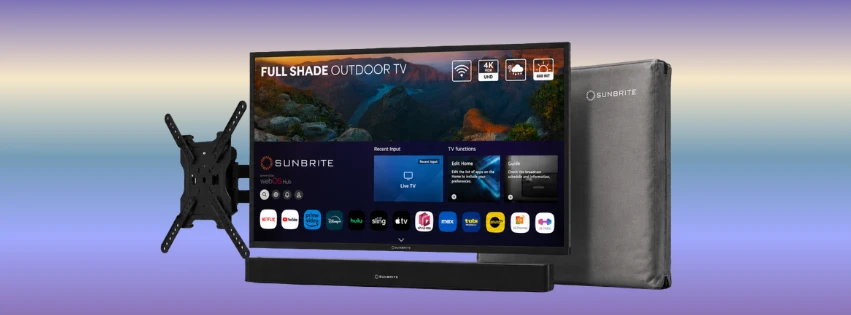
LED vs. QLED vs. OLED: Choosing the Best Display 
Technology for Your Outdoor TV

When choosing an outdoor TV, it's important to understand that not all displays are designed to perform the same in outdoor environments. While an indoor TV may look incredible in your living room, outdoor conditions introduce completely different challenges. Bright sunlight, glare, changing weather, humidity, and wide temperature swings can dramatically affect picture quality and even the lifespan of a television. That's why understanding the differences between today's most common display technologies like LED, QLED, OLED, and RGB-W is one of the most important steps when shopping for an outdoor TV. Whether you're creating the ultimate backyard entertainment space or upgrading your patio, choosing the right display ensures you'll enjoy a bright, vibrant picture no matter where you install your TV.

Understanding Today's Display Technologies

Shopping for a TV often means sorting through a list of confusing acronyms. Fortunately, the differences are easier to understand than they may seem. 

LED

LED TVs remain one of the most popular and affordable display options available. They deliver solid picture quality, are energy efficient, and work well in environments where direct sunlight isn't a major concern.

Benefits

  • More affordable than premium display technologies
  • Great for covered patios and screened porches
  • Good picture quality during evenings or cloudy days
  • Uses less power than many ultra-bright displays

Limitations
Standard LED displays don't produce enough brightness to overcome direct sunlight. When installed in bright outdoor spaces, images can appear washed out, making it difficult to enjoy movies, sports, or TV during the day.

Best for: Covered patios, screened porches, and shaded outdoor living spaces.

QLED

QLED builds upon traditional LED technology by adding a Quantum Dot layer that enhances both brightness and color performance. The result is a display that remains more vibrant in brighter environments while delivering richer, more realistic colors.

Benefits

  • Better visibility on sunny days
  • Enhanced color performance
  • Richer, more lifelike images
  • Higher brightness helps reduce the effects of glare
  • Excellent for watching sports, nature programming, and movies

For many outdoor installations, QLED offers one of the best balances between brightness, color accuracy, and overall viewing performance.

Best for: Partially sunny patios and outdoor spaces that receive moderate daylight.

OLED

OLED technology is widely recognized for producing exceptional contrast and true blacks because each pixel creates its own light.

While OLED delivers stunning image quality indoors, it isn't always the ideal choice for outdoor environments. Compared to high-brightness outdoor displays, OLED televisions generally cannot produce enough sustained brightness to compete with direct sunlight.

That means the incredible picture quality many people love indoors can become difficult to appreciate outside during the daytime.

Best for: Indoor home theaters and dark viewing environments.

RGB-W: Built for Outdoor Brightness

If LED is like using a standard flashlight, and QLED is like using a brighter flashlight with richer colors, RGB-W is like adding a powerful spotlight specifically designed to overpower sunlight.

Unlike traditional RGB displays that rely only on red, green, and blue subpixels, RGB-W technology adds a dedicated white subpixel. This additional white light allows the display to achieve significantly higher brightness levels while maintaining image clarity in challenging outdoor conditions.

That extra brightness is one of the biggest reasons outdoor TVs like SunBrite models remain easier to see during the brightest parts of the day.

Best for: Installations in full sun, uncovered patios or spaces with no shade.

Let There Be Light: Why Brightness Matters Outdoors
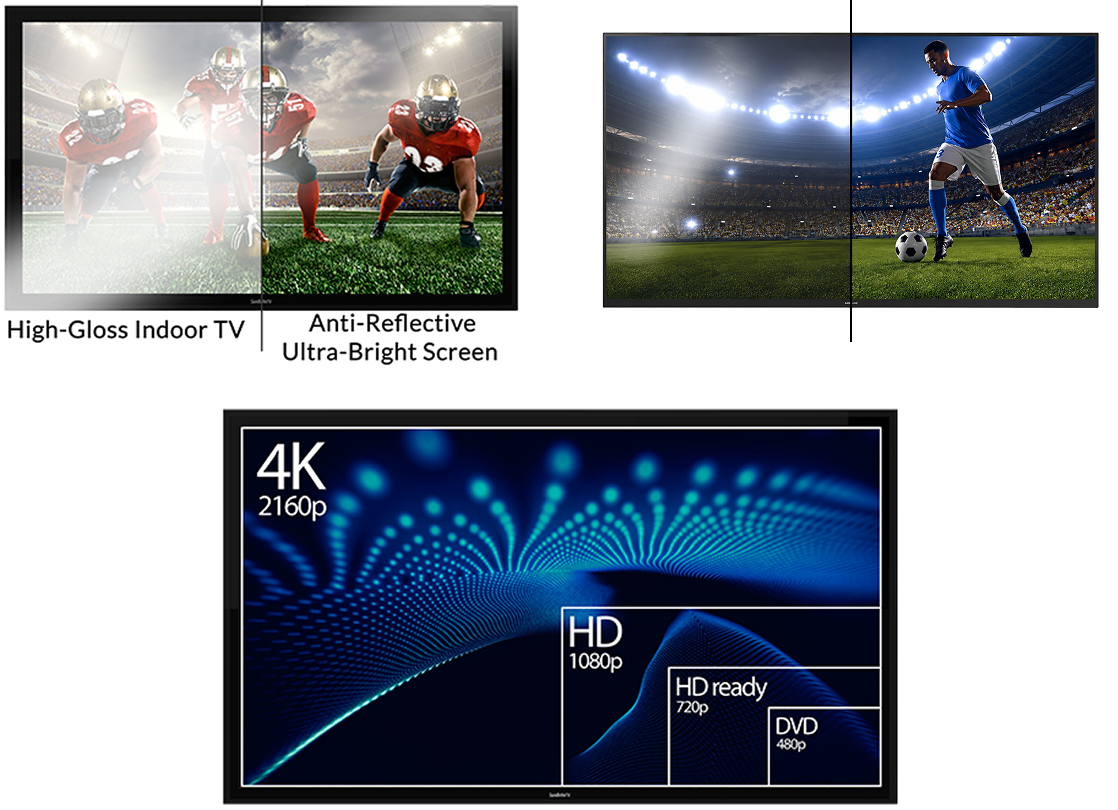
Many shoppers focus on resolution when buying a television. While 4K delivers incredible detail, resolution alone doesn't determine how well a TV performs outside. In outdoor environments, brightness has a much greater impact on what you actually see.

A bright display allows the image to remain visible despite sunlight, reflections, and glare. Without sufficient brightness, even a beautiful 4K image can appear faded or nearly impossible to watch. Outdoor TVs like SunBrite combine high-brightness displays with technologies designed to improve real-world viewing.

Anti-Glare Technology

Specialized anti-glare coatings reduce reflections from sunlight and surrounding objects, helping maintain a clearer picture throughout the day. Quarter Wave Plate Polarization found in the SunBrite Veranda 4 TV can even enhance outdoor screen readability while wearing sunglasses, allowing you to stay comfortable without straining your eyes.

HDR (High Dynamic Range)

HDR increases the difference between bright highlights and dark shadows, creating greater depth and more vibrant colors for a more realistic viewing experience.

Wide Viewing Angles

Whether guests are sitting directly in front of the TV or spread across the patio, wide viewing angles help everyone enjoy a consistent picture without significant color or brightness loss.

Refresh Rate

Higher refresh rates provide smoother motion during fast-moving scenes, making sports, racing, and action movies appear sharper and more fluid.

Choosing the Right Technology for Your Outdoor Space

The best display technology depends on where your TV will be installed.


Covered Patio or Screened Porch

A standard LED outdoor TV often provides the best value. With limited direct sunlight, LED offers excellent picture quality while keeping costs lower.


Partially Sunny Patio
QLED is an excellent choice for mixed-light environments. Its higher brightness and enhanced color performance help maintain a vibrant picture throughout the day while still delivering exceptional image quality after sunset.


Full-Sun Installation
When the TV will receive direct sunlight for much of the day, maximum brightness becomes essential. Outdoor displays using RGB-W technology are specifically engineered to produce the brightness needed to keep images visible even during peak afternoon sun, making them an ideal solution for full-sun outdoor living spaces.

See the Difference

Any Indoor TV Will Work Outside.

This is one of the biggest misconceptions homeowners have. Indoor TVs aren't designed for exposure to moisture, dust, insects, humidity, or temperature extremes. Even under a covered patio, prolonged outdoor exposure can shorten the life of an indoor television and lead to poor daytime performance.


Outdoor TVs are purpose-built with weather-resistant enclosures, brighter displays, enhanced cooling systems, and components engineered to withstand outdoor conditions.


"4K Means Better Outdoor Performance."

Not necessarily.

While 4K provides exceptional image detail, it doesn't improve visibility in sunlight. Outdoor performance depends far more on features like:

  • High brightness (measured in nits)
  • Anti-glare technology
  • Weather resistance
  • Temperature durability
  • Display technology optimized for outdoor viewing

These are the features that determine whether you'll actually enjoy watching your TV outside during the day.

Why SunBrite Outdoor TVs Stand Out

For over 20 years, SunBrite has been developing outdoor TVs and was the original outdoor television brand, understanding that a normal indoor TV can’t withstand harsh outdoor environments. 

From weather-resistant construction and high-brightness displays and anti-glare technology every feature of SunBrite TVs are built to deliver dependable performance outdoors. 

Choosing the right display technology is only part of the equation. Selecting an outdoor TV that's designed for your environment ensures you'll enjoy a brighter picture, greater durability, and reliable entertainment season after season.

When your TV is built for the outdoors, every backyard movie night, game day, and family gathering becomes a better viewing experience. 

LED vs. QLED vs. OLED: Choosing the Best Display Technology for Your Outdoor TV

LED vs. QLED vs. OLED: Choosing the Best Display Technology for Your Outdoor TV

Jul 21st 2026

When choosing an outdoor TV, it's important to understand that not all displays are designed to perform the same in outdoor environments. While an indoor TV may look incredible in your living room, outdoor conditions introduce completely different challenges.